


 Artificial Intelligence has become the new power tool at the CTE Center, but it’s actually proving to be a bit of a double-edged sword. While it’s basically a cheat code for doing the most tedious work much quicker, it also blurs the line between human precision and artificial data. This is creating a world where the completion speed is no longer the problem, but rather the accuracy of the information within it.
In the E-Sports computer labs, AI is an amazing assistant for building a foundation of code, but it’s also making the creative production side of things much more complex.
David Loosli, the instructor for the Esports Business and Production pathway, views AI as a way for students to jumpstart their brain. “AI is a valuable tool that allows students to take ideas and concepts, look at a more advanced thought process, and be able to convert that back into their own thoughts and their own wording.”
However, once you actually start on the production side, the “easy mode” no longer exists. “On the production side, it could be a little bit more challenging. Just because the production side is the actual video, the modifications, the tweaks, everything else in there.”
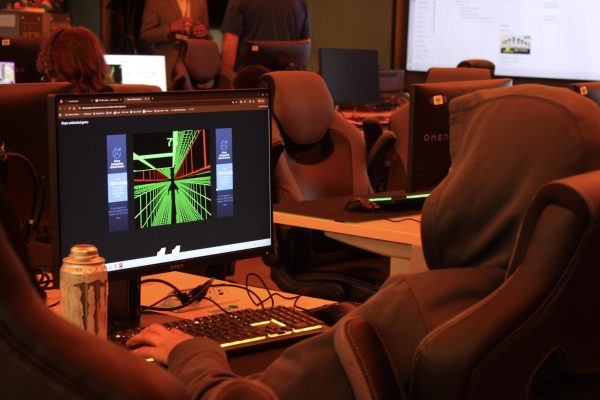
Loosli believes that both students and professionals shouldn’t let AI “run wild” on your code, but rather be used with limitations. He has his students use it only as a tool for brainstorming. “I want them to express their own ideas and their own thoughts and their own points of view. But I do allow it to be used to put in a prompt, get what AI had to go through to get a very basic knowledge, a base, a foundation, and then build upon that foundation, then put it into their own words and use that higher level thinking to create a very in-depth and beneficial end product.”
In politics, AI is the world’s fastest research assistant, but students are learning that fast doesn’t always mean factual when the machine relies on the entire internet and takes the average of all sources.
Across the hall in Political Science, the shift to AI is focused on data. Students are using AI to analyze massive data sets and run policy simulations, but teachers such as Corey Houchin are warning us about a phenomenon often called hallucinations. “With anything that you’re doing with AI, whether it’s working on math or writing a letter or anything, you have to make sure that the information that it produces is correct, because it’s not always 100% accurate.”
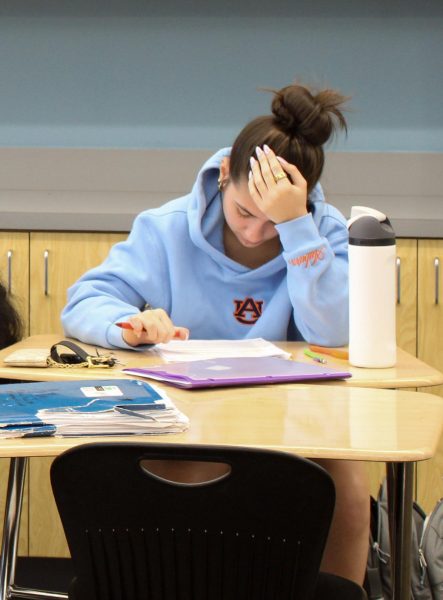
These inaccuracies are actually more math than imagination. AI doesn’t dream up lies, it simply searches the web and delivers the median result. Because it pulls from the most common answers on sites like Reddit or Quora, it risks repeating popular rumors as facts. This has forced the classroom to shift its focus. “I think [AI can research], but you know, again, you have to be critical of discerning what it provides for you.”
Students are now taught that while AI can help support with finding information and providing the foundations for research, it takes multiple non-AI sources to verify that the information isn’t just echoed rumors from the past.
“In fact, you know, when we look at the media and things like that, then we have to be even more concerned about fake news and misinformation and things that have been created by AI rather than actual people.”